
Above-average temperatures seem to be the new normal in the Tampa Bay area. This is why planting a shade tree on your property is not only a smart and practical move but also a sound property investment. What’s not to love? Save money on energy bills, support local wildlife, and as far as curb appeal is concerned, there are plenty of choices for achieving various looks.
However, there are other things to consider. For example, some trees are deciduous; that is, they lose leaves in the fall. Others stay green year-round. So, if your windows are facing west, where the sun is hottest in the afternoon, you probably want a heat shield in all seasons. On the other hand, in the east, a tree without leaves in the winter will warm up your house quicker in the morning.
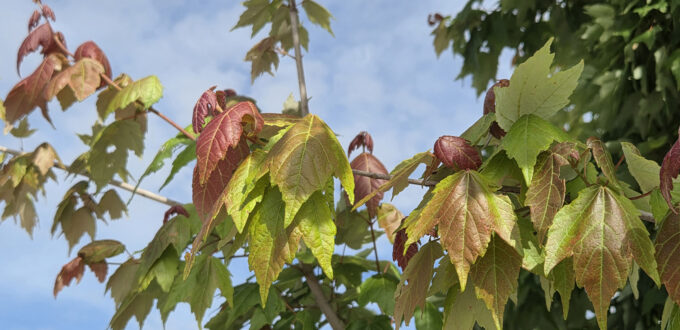
You will also need to consider available space, particularly how far from all buildings, driveways, and roads you can plant. Do you miss the change of seasons? Red Maple, Sweetgums, and Sycamores are a magnificent display of fall colors. Do you prize large flowers and dramatic foliage? Consider magnolias. Do you enjoy growing your own food? Pecans are it! Are you of the opinion that kids should be playing outside? Plant an oak for climbing, tire swings, and wildlife watching.
Here is the list of shade trees we typically stock at Canterbury Farms Nursery:
- Red Maple
- Pecan
- Sweetgum
- Southern Magnolia
- Slash Pin
- Sycamore
- Podocarpus
- Southern Live Oak
- Baldcypress
- Winged Elm
- American Elm
- ‘Drake’ Chinese Elm
- Japanese Blueberry
Why Palm Trees Aren’t Generally Designated as Shade Trees. Put simply, the slender trunks and sparse canopies of most palms provide only limited shade; therefore, they are better suited for creating focal points and accents in iconic “Florida” landscapes. Nevertheless, several species of larger palms figure in Pasco County’s “official” list of shade trees. You can find at Canterbury Farms Nursery the following varieties:
- Bismarck Palm (Bismarkia nobilis)
- Canary Island Date Palm/Pineapple Palm (Phoenix canariensis)
- Senegal Date Palm (Phoenix reclinata)
- Sylvester Date Palm/Wild Date Palm (Phoenix sylvestris)
What to Look for When Selecting a Young Shade Tree: When selecting a young shade tree, pay attention to specific characteristics. This will ensure your tree has a strong start and establishes itself successfully in your yard.
- Healthy Roots: Examine the root system of the young tree. Look for well-developed, fibrous roots that are evenly distributed throughout the root ball. Avoid trees with roots that are circling or girdling the trunk, as this can lead to long-term health issues.
- Straight Trunk: Make sure the trunk is straight and has no visible damage or wounds. A strong trunk is essential for upward growth and maintaining a desirable shape. A straight trunk will provide a strong foundation for the tree as it grows.
- Well-Spaced Branches: Assess the branching structure of the young tree. Look for well-spaced branches that radiate outwards from the trunk, rather than those that are tightly clustered or crossing over each other. This will help the tree develop a balanced and open canopy.
- Healthy Foliage: Inspect the leaves of the young tree. They should be vibrant, evenly colored, and free from any signs of discoloration, spots, or pests. Healthy foliage is indicative of a vigorous and well-established tree.
- Local Adaptability: Select tree species that are known to thrive in our area. Native or locally adapted varieties are often better suited to the environmental factors of your region and tend to require less maintenance.
Proper Tree Planting Techniques: To ensure the success of your shade tree planting endeavors, follow these key tips:
- Choose the right location: Consider the mature size and spread of the tree, ensuring it won’t interfere with power lines, structures, or underground utilities. Also, factor in sun exposure and soil conditions.
- Dig a proper planting hole: Make the hole two to three times wider than the tree’s root ball, but no deeper. The top of the root ball should sit slightly above ground level.
-
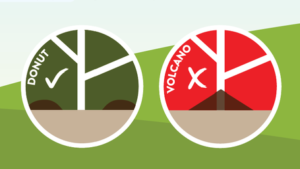
One of the most common examples of incorrect mulching is “volcano mulching,” in which excessive amounts of mulch materials are applied at the base of plants and piled against the trunks or stems, creating a volcano shape. Mulch should not touch the stem or trunk of your tree, and doing so can lead to improper root growth, decay, and infestation.
Water and mulch: After planting, water the tree thoroughly and apply a layer of mulch around the base, leaving a gap near the trunk to prevent moisture-related issues.
- Prune and maintain: Regularly prune your shade trees to maintain their shape, remove dead or damaged branches, and promote healthy growth.
Shade trees are essential for creating a comfortable outdoor space while embracing the beauty of native and Florida-friendly tree varieties, and we are glad to help you select just the right one!