
“My poor palm tree is all brown, and it looks so sad. Is it dead?”
We hear this question a lot, and our answer applies to both palms and other cold-sensitive trees or shrubs: “It depends.” Here are key points:
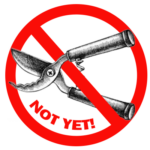 Important! Do not cut off any damaged branches until you’re reasonably sure that we’re done with cold spells for the season.
Patience is key. Wait about two weeks after damage occurs before testing or pruning. Some tissue may still appear green but is no longer viable. It takes time for damaged tissue to fully decay and change color, so allowing that process to happen helps ensure you’re cutting to truly healthy growth.
After two (or more) weeks, perform a scratch test to see how your palm or plant is doing. Here is what you need to do:
 Lightly scratch the outer bark and check the color underneath. Always work from the tip of the branch downward until you find healthy green wood.
If you don’t find green tissue,
- check lower on the stem or near the base, then
- scratch near the root flare.
- If stems are fully brown and brittle to the base, you might need to replace it.
Your next step depends on what you’re seeing.
If the plant or palm is still alive, you’ll want to prune it.
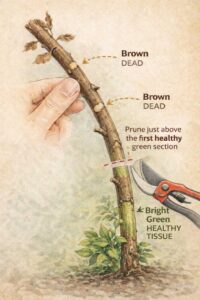
The key principle is simple: green tissue is a healthy tissue. That’s where you will want to make your cuts. Pruning back to living wood allows the plant to flush out with strong new growth as temperatures warm.
Once you locate living tissue, make a clean cut slightly above that area. Remove all brown, brittle growth and allow the plant to push new growth from the remaining healthy stem.
When in doubt, remember: Cut back to green — that’s where recovery begins.