- Mulching keeps you (and your plants) covered
Mulching is an essential aspect of gardening in Florida. It retains moisture, suppresses weeds, regulates soil temperature, and improves soil health.
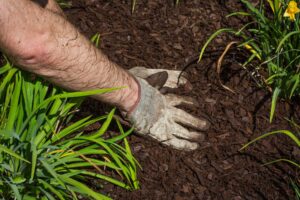
Mulching is one of the principles of Florida-Friendly Landscaping, a set of guidelines designed by the University of Florida IFAS Extension to promote sustainable landscaping practices in Florida. By using mulch, you can reduce water consumption, limit the use of chemical fertilizers, and minimize yard waste. Florida-Friendly Landscaping emphasizes the use of mulch made from natural, locally-sourced materials, which helps support local businesses and reduces the carbon footprint associated with transportation.
(Learn more about the Nine Principles of Florida-Friendly Landscaping)
Here are some mulching tips to help you get started:
- Choose the right mulch: There are many types of mulch to choose from, such as wood chips, pine straw, and shredded leaves. Consider the purpose of your mulch, the plants you’re mulching, and the aesthetics you want to achieve.
- Apply the right amount: A good rule of thumb is to apply 2-3 inches of mulch around your plants. Too little mulch won’t be effective, while too much can suffocate your plants and promote fungal growth.
-
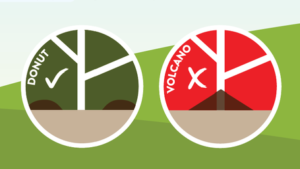
One of the most common examples of incorrect mulching is “volcano mulching,” in which excessive amounts of mulch materials are piled at the base of plants, touching trunks or stems. Placing mulch too close to the stem or trunk of your plant can lead to improper root growth, decay, and infestation.
Don’t pile mulch against plant stems: Mulch piled against the stems of plants can trap moisture and promote rot. Keep a few inches of space between the mulch and the stems of your plants.
- Mulch regularly: Mulch breaks down over time, so you’ll need to add more to maintain the desired depth. Aim to mulch at least once a year or as needed.
- Use mulch as a soil amendment: As mulch breaks down, it adds organic matter to the soil, improving soil health and fertility. When adding mulch, consider using it as a soil amendment instead of just a top dressing.
- Consider the time of year: In Florida, the best time to mulch is in the spring or fall when temperatures are moderate. Avoid mulching in the summer when the heat can trap too much moisture around plant roots.
(Pro tip: Be careful if using some of the free recycled mulches that may be available from tree services or municipal debris collection sites. These mulches are not treated or certified in any way and can often contain debris that has many seeds for weeds just waiting to sprout in your beautiful plant beds.)
While organic materials, such as wood chips and pine straw, are popular choices for mulching, inorganic materials (rock) can provide an alternative, if desired. Here are some pros and cons to consider before choosing an alternative mulch:
Pros:
- Long-lasting: Stone can last for years without needing replacement.
- Aesthetically pleasing: Stone mulch can give a garden a clean, modern look.
- Does not attract pests: unlike organic mulches, stone mulch does not appeal to termites or rodents.
- Provides good drainage: Both stone and rubber mulch allow water to easily flow through them, preventing waterlogging and root rot.
Cons:
- Expense: Stone is much more expensive than organic mulch.
- Can retain heat: Stone absorbs and retains heat, potentially overheating plant roots and damaging plants during hot weather.
- Does not improve soil health: Unlike organic mulches, stone does not break down and improve soil health over time.
-
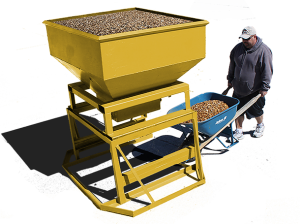
The Drop N Rock was designed to make working with rock a little easier.
Weight: Stone is significantly heavier than natural mulch, which can present difficulties for those with physical limitations. (Pro tip: If you’re looking to DIY stone in your plant beds, consider purchasing from Rock Solid Stone Center in the Tampa Bay area. They offer the rental of a device called the “Drop N Rock” hopper, which allows you to move and install aggregate without shoveling and without the mess.)
Ultimately, the choice of mulch comes down to personal preference, the needs of your garden, and your budget. Consider the pros and cons of each option before making a decision, and don’t hesitate to ask our garden center experts for advice.
- March in Central Florida garden: to-do list
WHAT TO DO
Azaleas: Prune azaleas just after they finish blooming to shape or produce a fuller plant.
Shrubs and trees: Prune when new growth begins after the end of the dormant season. To guard next season’s blooms, begin pruning after the last flowers fade but before the new buds set.
Palms and shrubs: Fertilize palms, azaleas, camellias, and other ornamental shrubs if needed.
Irrigation: Spring is a great time to re-check your sprinkler systems for efficient water use.
WHAT TO PLANT
Annuals: Replace declining winter annuals with varieties such as angelonia, gazania, and salvia that will provide color now and into the summer months.
Herbs: In addition to their culinary value, many herbs are ornamental and attract butterflies to the garden.
Vegetables: Warm-season crops, such as beans, peppers, squash, and others can be planted now.
- How to tell if your palm or plant might not recover after a freeze.
“My poor palm tree is all brown, and it looks so sad. Is it dead?”
We hear this question a lot, and our answer applies to both palms and other cold-sensitive trees or shrubs: “It depends.” Here are key points:
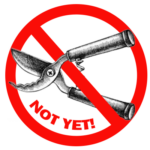 Important! Do not cut off any damaged branches until you’re reasonably sure that we’re done with cold spells for the season.
 Patience is key. Wait about two weeks after damage occurs before testing or pruning. Some tissue may still appear green but is no longer viable. It takes time for damaged tissue to fully decay and change color, so allowing that process to happen helps ensure you’re cutting to truly healthy growth.
After two (or more) weeks, perform a scratch test to see how your palm or plant is doing. Here is what you need to do:
 Lightly scratch the outer bark and check the color underneath. Always work from the tip of the branch downward until you find healthy green wood.
If you don’t find green tissue,
- check lower on the stem or near the base, then
- scratch near the root flare.
- If stems are fully brown and brittle to the base, you might need to replace it.
Your next step depends on what you’re seeing.
If the plant or palm is still alive, you’ll want to prune it.
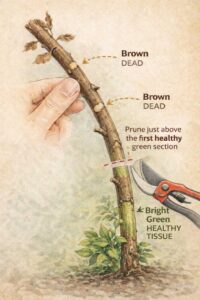
The key principle is simple: green tissue is a healthy tissue. That’s where you will want to make your cuts. Pruning back to living wood allows the plant to flush out with strong new growth as temperatures warm.
Once you locate living tissue, make a clean cut slightly above that area. Remove all brown, brittle growth and allow the plant to push new growth from the remaining healthy stem.
When in doubt, remember: Cut back to green — that’s where recovery begins.
- My tree does not look so good. How can I tell if it is dead?
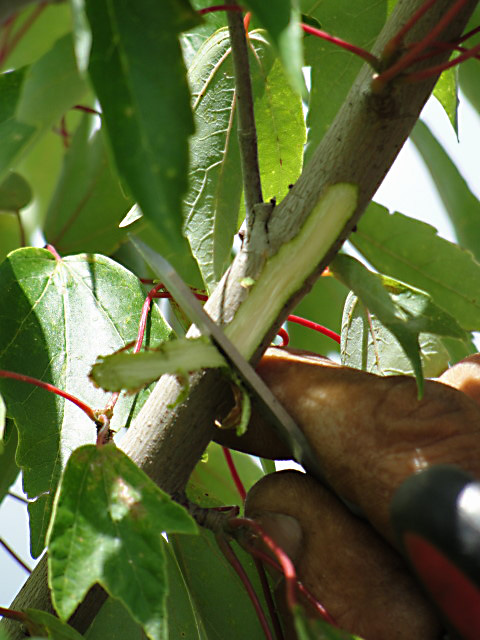
Healthy tree
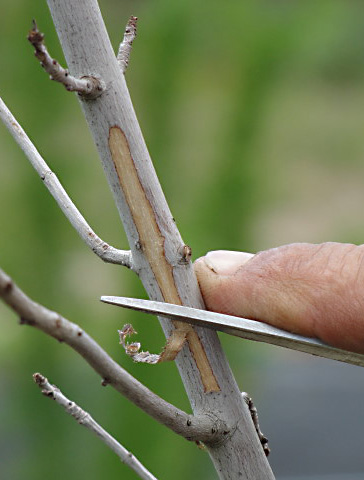
Dead tree
Distressed tree
An oldie, but goody as we get asked this one a lot.
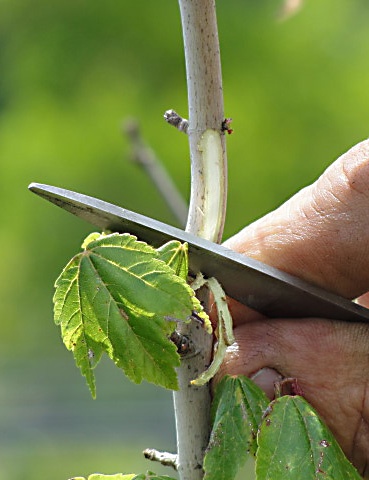
Once winter has passed, in the spring your dormant (lose/drop leaves in winter) trees will begin to flush and promote more leaves and foliage. If you do not see this transition taking place by late spring, perform the following test (we call it a scratch test):
Take a pair of scissors, a pocket knife, or a strong thumbnail and scrape on a branch of the tree to see the inside coloring.
Once scraped, one of the following 3 scenarios will occur.
1. The branch insides are a vibrant yellow and green.
Result: Congratulations, you have a happy and healthy tree.
2. The branch insides are less vibrant yellow with a little green.
Result: Your tree is showing signs of distress. Our best advice in a situation like this would be to cut back all the dead branches back to where the green foliage is and start giving it more water. A tree in distress usually comes from a lack of water or a deep freeze.
3. The branch insides are light brown/beige in color with no signs of green color and look dry.
Unfortunately, this reveals signs of a dead tree.
Call us if you have questions or need advice on what kind of replacement tree to pick. - How to effectively protect your plants and palms from freeze
When covering landscaping beds, simply lay your cloth or blankets on top of your cold sensitive plants and tack down with stakes or large sod staples.

Remove once freeze warnings are lifted.
When covering cold sensitive palms, be sure to wrap the heads and fronds of the palms with cloth or blankets. Secure the cloth by tying a string around it, or you can also use clothes pins or larger clips. It is imperative that the heads of the palms are covered thoroughly, as this is where the heart of the palm is and the heart is the lifeline of the palm.
You should also work yourself down the trunk all the way to the ground as the ground projects heat to the palm.
Again, covering as much of the entire palm is crucial when it comes to protecting your palms from a freeze.
Once freeze warnings have ceased, simply unwrap, fold, and store away for next time. Keep in mind, these cloths are reusable for many, many years with good care.
- Plants and Palms that need to be protected from freeze
We specialize in growing Florida-friendly, drought-tolerant plants that weather freezing temperatures well.
However, we also sell some popular tropical/seasonal items imported from Miami/Homestead that will require extra care when temperatures falls below freezing (also, read article on how to properly protect your plants from freezing here). They are:
- Adonidia Palm aka Christmas Palm
- Allamanda
- Arboricola
- Areca Palm
- Bird of Paradise (Orange/White)
- Black Magic
- Blue Daze (If damaged by freeze, cut back & it will grow back.)
- Bougainvillea
- Cardboard Palm
- Cassia
- Copperleaf
- Crotons (Mammy & Petras)
- Dipladenia
- Foxtail Palm
- Gardenia
- Ginger
- Hibiscus (If damaged by freeze, cut back & it will grow back.)
- Ixora (Maui Red)
- Jasmine (Carolina) (If damaged by freeze, cut back & it will grow back.)
- Jasmine (Star) (If damaged by freeze, cut back & it will grow back.)
- Lady Palm
- Lantana (purple, white & yellow) (If damaged by freeze, cut back & it will grow back.)
- Mandevilla
- Plumbago (If damaged by freeze, cut back & it will grow back.)
- Pony Tail Palm
- Queen Palm (younger, smaller ones)
- Red Sister
- Rhapis (Lady) Palm
- Robellini Palm (younger, smaller ones)
- Ruella (Mexican Petunia) (If damaged by freeze, cut back & it will grow back.)
- Split Leaf
- Prepare for fall with this gardening to-do list for September
Here’s a landscape and garden to-do list for the month of September:
WHAT TO PLANT
Annuals/Bedding plants: If your summer beds need refreshing, try ageratum, coleus, celosia, zinnia, and wax begonia for color into fall.
Herbs: You can plant herbs that tolerate the warm temperatures of early fall, such as Mexican tarragon, mint, rosemary, and basil.
Vegetables: It is hot, but numerous cool-season (as well as warm-season) crops can be planted.
- Easily transplant: arugula, beets, broccoli, Brussels sprouts, cabbage, cauliflower, Chinese cabbage, collards, eggplant, endive, kale, lettuce, peppers, strawberry, sugarcane, strawberry, Swiss chard, tomatoes, and tropical spinaches.
- Transplant with care: celery, mustard, pineapple, and spinach.
- Use seeds: beans (bush, lima, pole), carrots, cucumbers, onions (bunching), radish, squashes, and turnips.
WHAT TO DO
Lawn problems: Continue to monitor the lawn for signs of insect damage. Fall armyworms, chinch bugs, mole crickets, and sod webworms are still active this month.
Irrigation: Check that your irrigation systems are providing good coverage and operating properly before the summer rains taper off.
Citrus: Fertilize your citrus trees with a balanced fertilizer either this month or in October. If the weather has been rainy, do not use soluble nitrogen as rains will leach it from the soil too quickly.
Fertilizer Bans: Some municipalities in Florida prohibit the application of fertilizer to lawns and/or landscape plants during the summer rainy season (June–September). See if such an ordinance exists in your area.
Vegetable gardens: Prepare your fall vegetable garden if you didn’t already do it in August. Using transplants from your local garden center will get the garden off to a fast start, but seeds can provide a wider variety from which to choose.
Source: University of Florida IFAS Extension (https://edis.ifas.ufl.edu/)
- When to start your veggies in Zone 9
- How to choose the best Crape Myrtle for your landscape
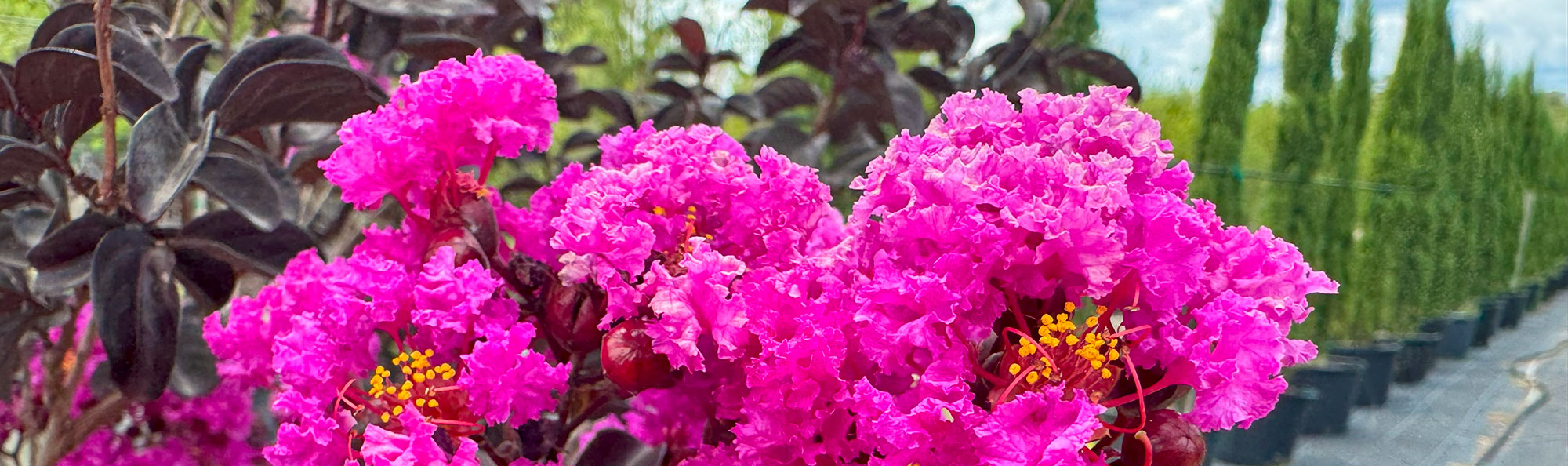
Crape Myrtles are a popular choice for Florida landscapes. They are wind-resistant, moderately drought-tolerant, sun-loving, low-maintenance trees that burst into color from May through September.
Many of our shoppers confess that deciding on a color is a difficult task. However, choosing your cultivar by color alone is a mistake because Crape Myrtles also come in a range of shapes and sizes, which means they may eventually outgrow the space you envisioned for them. Unlike ligustrums, loropetalums, podocarpus, and other shrubs that can be kept small by pruning, Crape Myrtles are not easy to contain. The annual “crape murder,” a common shearing practice that somewhat controls the size, is a poor solution, as it not only turns Crape Myrtles into ugly broomsticks during cool months but also weakens the tree and shortens its lifespan.
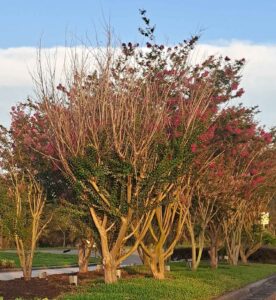
The sad irony is that Crape Myrtles grow beautifully shaped crowns naturally, so aside from selective trimming of overgrown branches and suckers, or optional clipping of berries to prolong blooming, they do not require much work.
Our advice echoes the Florida Friendly landscaping principle, “Right Tree, Right Place,” and we suggest choosing your Crape Myrtle by its expected mature size.
Fortunately, there are plenty of colors in each size category. Here are the varieties we consistently carry:
Large* (15′ to 20+’H x 15’W):
- Muskogee: Lavender
- Tuscarora: Dark Pink
- Dynamite: Red
- Natchez: White
- Tuskegee: Dark Pink
*These varieties are fast-growing with green foliage in the summer.
Intermediate (12’H x 8’W):
- Catawba: Purple blooms, green foliage
The Ebony series (below)**
- Shell Pink
- White
- Raspberry
- Purple
- Red
**Slower growing. Feature dark maroon, almost black foliage.
Dwarf (5’H x 8’W):
Enduring Summer: Red blooms, green leaves.
- How to get your trees and palms ready for hurricane season
We all know that living in the Sunshine State comes with its perks – the endless beaches, the vibrant culture, and of course, the lush landscapes. But along with the beauty of Florida comes the reality of hurricane season, especially during the busy months of August and September. At Canterbury Farms Nursery & Garden Center, we want to make sure your trees, palms, and landscape plants stand tall against the storms. Here are some essential dos and don’ts.
Dos:
-
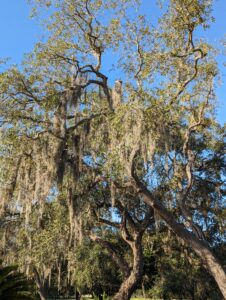
Contrary to popular belief, Spanish moss does not hurt trees. However, it may indicate that the tree was not quite healthy to begin with. bury Farms
Trim with Tender Care: As hurricane season approaches, it’s a great time to give your trees and palms a gentle pruning. Remove dead or weak branches that could become projectiles in high winds. Focus on maintaining the tree’s natural shape to prevent excessive stress. It is important to keep in mind the airflow through the canopy of the tree during a storm. Trees that have overly dense foliage catch the wind more easily and are more likely to be uprooted.
- Deep Hydration: Proper hydration is key! Adequate water supply helps your plants build sturdy root systems that can withstand the onslaught of a storm. Ensure your trees and palms are well-watered a few days before a hurricane threat, but be cautious not to overwater, which can lead to root rot.
- Mulch Magic: A layer of mulch around the base of your plants can provide much-needed protection. Mulch helps retain moisture, prevents soil erosion, and offers an extra layer of insulation for the roots. Just remember to keep the mulch a few inches away from the trunk to prevent rot.
- Stake Smartly: Young trees might need some support during heavy winds. Stake them carefully to avoid causing damage to the roots. Make sure the ties aren’t too tight as you still want the tree to be able to have some natural sway so that it doesn’t snap off in high winds.
-
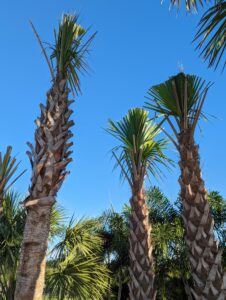
You may find some palms hurricane-cut; however, recent research discourages that practice as a form of routine pruning.
Inspect Regularly: Regularly check your trees and palms for signs of disease or pest infestations. Weak plants are more susceptible to storm damage, so keeping them healthy throughout the year is crucial. (Side note: During the recent seminar, Pete answered a question about Spanish moss on trees. He noted that the Spanish moss itself does not harm the tree, but it may be an indicator that the tree is not as healthy as it could be. Typically, the healthier trees tend to have denser foliage, which does not lend itself to the growth of Spanish moss.) If you have questions regarding the health of your tree, it is always helpful to seek the advice of a certified arborist in your local area.
Don’ts:
- Hurricane Cutting Palms: During the 70s and 80s, it became a common practice to “hurricane cut” several species of palms, which involved pruning away almost all of the palm’s fronds, leaving just a few short fronds at the very top. However, recent research has found that this practice makes the palms more likely to be damaged in heavy storms. Scientists have found that Mother Nature knows best, and the natural canopies of the palms provide protection for the hearts, making them less likely to be snapped off in high winds. Pete recommended using the hands of a clock as a guide and giving your palms a 3 to 9 or 2 to 10 cut, depending on the species, which means trimming only the fronds that hang below the 3:00 or 9:00 hands.
- Over-Fertilizing: While it’s important to keep your plants healthy, avoid excessive fertilization before a storm. Rapid growth from heavy fertilization can make plants more susceptible to damage.
- Wrapping Trunks Tightly: Contrary to popular belief, tightly wrapping tree trunks with materials like burlap or rope can do more harm than good. It can trap moisture and encourage rot or even girdle the tree’s trunk as it grows.
- Ignoring Drainage: Proper drainage around the base of your plants is vital. Waterlogged soil weakens root systems, making it easier for trees and palms to be uprooted by strong winds.
-
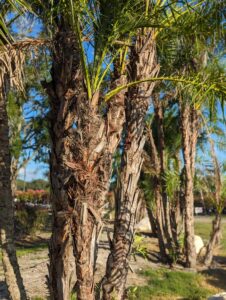
It’s a good idea to remove boots from the trunks of palms if they are starting to rot, so they don’t become projectiles during a hurricane.
Ignoring Palm Boots: While palm trees naturally shed fronds, often the “boots,” which are the tough, woody bases of the fronds, remain on the tree trunks. It is recommended to remove as many boots as possible, especially those that have begun to rot, so that they don’t become projectiles. Removing palm boots can also help to alleviate problems with certain undesirable rodents.
As August and September roll around, keep a close eye on the weather reports and take proactive steps to prepare your trees, palms, and landscape plants for potential hurricanes. A little effort now can go a long way in safeguarding the beauty and health of your outdoor oasis. At Canterbury Farms Nursery & Garden Center, we’re here to help you weather the storms and keep your greenery thriving year-round. Stay safe, stay green, and happy gardening!
For more information, contact your local county extension office or visit these handy links:
Is my tree safe? Recognizing Conditions that Increase the Likelihood of Tree Failure
-

Growing in the Tampa Bay area for over 30 years