
Embrace the Shade: Beautify Your Yard with Native Shade Trees

Sycamore trees

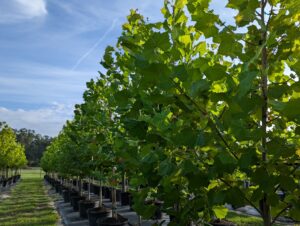
American Sycamore (Platanus occidentalis) is a relatively fast-growing tree. You can start to take advantage of it’s shady benefits in just a couple of years. Photo by Anna Stubbendick, Canterbury Farms

Don’t let the summer heat keep you down.  Dive into the world of shade trees with us and explore how they can transform your yard into a cool and inviting oasis. Since our nursery is located in Pasco County, FL, we’ll be focusing on some of their residential yard requirements and highlighting some fantastic native Florida varieties that are perfect for creating a shady retreat. So, grab your gardening gloves and let’s get started!

The Importance of Shade Trees in Your Yard:

In the scorching Florida heat, shade trees are like your personal superheroes, providing relief from the sun’s relentless rays. They offer a multitude of benefits that go beyond just aesthetics. Shade trees can:

  • Reduce energy costs: By strategically planting shade trees near your home, you can lower your energy bills by providing natural cooling and reducing the need for excessive air conditioning.
  • Create a comfortable outdoor space: With the shade provided by these trees, you can create a cool and tranquil retreat where you can relax, entertain, and enjoy the beauty of nature.
  • Improve air quality: Trees absorb carbon dioxide and release oxygen, helping to purify the air we breathe. They also act as natural filters, reducing dust, pollutants, and noise levels.
  • Support wildlife: Native shade trees attract birds, butterflies, and other wildlife, enhancing biodiversity in your yard and promoting a healthy ecosystem.

Native Florida Shade Tree Varieties:

Let’s take a closer look at some fantastic native trees that thrive in our area, and qualify as  approved shade trees for Pasco County.  All of these trees are typically in stock at Canterbury Farms Nursery & Garden Center:

  • Southern Live Oak (Quercus virginiana): A majestic, large evergreen tree with spreading branches and glossy dark green leaves. It provides dense shade and is known for its longevity and resilience.
  • Red Maple (Acer rubrum): A deciduous tree that showcases vibrant red foliage in the fall. It has a rounded canopy and adds a splash of color to any landscape.
  • American Sycamore (Platanus occidentalis): A massive deciduous tree with distinctive mottled bark and broad, palmate leaves. It offers ample shade and has an imposing presence.
  • Sweetgum (Liquidambar styraciflua): A tall, deciduous tree with star-shaped leaves that turn brilliant shades of red, orange, and yellow in the fall. It provides a beautiful display of colors.
  • Bald Cypress (Taxodium distichum): A deciduous conifer known for its unique, buttressed trunk and feathery foliage. It thrives in wet areas and offers a graceful, delicate appearance.
  • Southern Magnolia – D.D. Blanchard and Little Gem cultivars (Magnolia grandiflora): Evergreen trees with large, glossy leaves and fragrant, showy white flowers. They provide year-round shade and a touch of elegance.
  • Slash Pine (Pinus elliottii): A fast-growing evergreen tree with long needles and a straight trunk. It offers excellent shade and is commonly found in forests and large landscapes.
  • Eastern Red Cedar (Juniperus virginiana): A compact evergreen tree with dense foliage and aromatic wood. It provides year-round shade and serves as a privacy screen.
  • Elm – Winged, American (Ulmus alata, Ulmus americana): Deciduous trees with graceful arching branches and serrated leaves. They provide shade and exhibit a lovely form.
Common Name Botanical Name Mature Size Range Root Spread Evergreen
Southern Live Oak Quercus virginiana 40-80 ft 80-100 ft Yes
Red Maple Acer rubrum 40-60 ft 30-40 ft No
American Sycamore Platanus occidentalis 70-100 ft 50-70 ft No
Sweetgum Liquidambar styraciflua 60-75 ft 40-50 ft No
Bald Cypress Taxodium distichum 50-70 ft 30-40 ft No
Southern Magnolia Magnolia grandiflora 20-40 ft 30-40 ft Yes
Slash Pine Pinus elliottii 60-100 ft 40-60 ft Yes
Eastern Red Cedar Juniperus virginiana 25-40 ft 20-30 ft Yes
Elm Ulmus spp. 40-80 ft 40-60 ft No
         
  •  

Note: There are several other species of commonly used landscape trees that were formerly on Pasco County’s recommended tree list which are now considered “Ornamental Trees” instead of “Shade Trees.”  These trees include Crape Myrtles, several Hollies, Bottlebrush, and Ligustrum, among others less commonly used. 

Why Palm Trees Aren’t Generally Considered Shade Trees:

Palm trees are certainly iconic in Florida, but they are not typically considered shade trees. While they offer a tropical ambiance and are well-suited to coastal landscapes, their tall, slender trunks and sparse canopies provide limited shade. However, they can be great for accentuating certain areas of your yard or creating a focal point.  There are only a few species of larger palms that are approved for use as shade trees in Pasco County as of July 2023, here’s a list of the varieties typically found at Canterbury Farms:

  • Bismarck Palm (Bismarkia nobilis)
  • Canary Island Date Palm/Pineapple Palm (Phoenix canariensis)
  • Senegal Date Palm (Phoenix reclinata)
  • Sylvester Date Palm/Wild Date Palm (Phoenix sylvestris)

Characteristics to Look for When Selecting a Young Shade Tree:

When selecting a young shade tree, it’s essential to choose a healthy, well-formed specimen that exhibits promising growth potential. By paying attention to these characteristics, you can ensure that your young tree has a strong start and establishes itself successfully in your yard.

  1. Healthy Roots: Examine the root system of the young tree. Look for well-developed, fibrous roots that are evenly distributed throughout the root ball. Avoid trees with roots that are circling or girdling the trunk, as this can lead to long-term health issues.
  2. Straight Trunk: Check that the trunk of the young tree is straight and free from any visible damage or wounds. A straight trunk will provide a strong foundation for the tree as it grows.
  3. Well-Spaced Branches: Assess the branching structure of the young tree. Look for well-spaced branches that radiate outwards from the trunk, rather than those that are tightly clustered or crossing over each other. This will help the tree develop a balanced and open canopy.
  4. Healthy Foliage: Inspect the leaves of the young tree. They should be vibrant, evenly colored, and free from any signs of discoloration, spots, or pests. Healthy foliage is indicative of a vigorous and well-established tree.
  5. Strong Central Leader: Identify if the young tree has a strong central leader, which is the main vertical stem of the tree. A well-defined central leader promotes upward growth and helps the tree maintain a desirable shape.
  6. Local Adaptability: Select tree species that are known to thrive in your local climate and soil conditions. Native or locally adapted varieties are often better suited to the environmental factors of your region and tend to require less maintenance.

Proper Tree Planting Techniques:

To ensure the success of your shade tree planting endeavors, follow these key tips:

  1. Choose the right location: Consider the mature size and spread of the tree, ensuring it won’t interfere with power lines, structures, or underground utilities. Also, factor in sun exposure and soil conditions.
  2. Dig a proper planting hole: Make the hole two to three times wider than the tree’s root ball, but no deeper. The top of the root ball should sit slightly above ground level.
  3. Amend the soil: Mix organic matter, like a bit of pine bark, into the soil to improve drainage and provide nutrients.  Worm castings and charged bio-char are great organic nutrient solutions.  An all-purpose time-release fertilizer can be added to the planting hole as well for a boost of nutrients.
  4. Volcano mulching

    One of the most common examples of incorrect mulching is “volcano mulching,” in which excessive amounts of mulch materials are applied at the base of plants and piles against the trunks or stems, creating a volcano shape. Mulch should not touch the stem or trunk of your plant and doing so can lead to improper root growth, decay, and infestation.

    Water and mulch: After planting, water the tree thoroughly and apply a layer of mulch around the base, leaving a gap near the trunk to prevent moisture-related issues.

  5. Prune and maintain: Regularly prune your shade trees to maintain their shape, remove dead or damaged branches, and promote healthy growth.

Shade trees are essential for creating a comfortable outdoor space while embracing the beauty of native Florida varieties. From the majestic Southern Live Oak to the stunning Southern Magnolia, these trees offer an array of benefits and contribute to the overall health and well-being of your yard. So, head over to Canterbury Farms Nursery & Garden Center, explore these shade tree options, and embark on a journey to transform your yard into a shady paradise!

Hollywood Hibiscus Take Center Stage at Canterbury Farms Nursery & Garden Center!
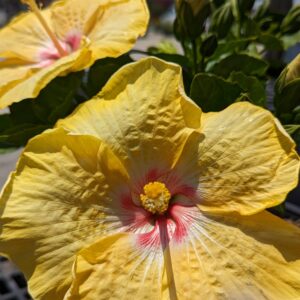
Lights are dimming, and the excitement is building at Canterbury Farms Nursery & Garden Center as we unveil our latest crop of dazzling beauties: Hollywood Hibiscus! These star-studded floral celebrities are ready to take center stage in your garden, adding a touch of glamour and charm like never before.

Our Show-stopping Varieties:

  • Gold Digger Hibiscus

    All Hollywood Hibiscus, like this Gold Digger variety, prefer 6-8 hours of sunlight daily. Photo by Anna Stubbendick, Canterbury Farms

    Gold Digger: Gold Digger sure does love to put on a great show, and is always appearing with new bling. Truly, you’ll do a double-take when you see her out and about. Gold Digger steals the show with her vibrant golden petals that shimmer like a treasure trove. 

  • Playboy: Oh Playboy, everyone loves you because you’re just so enthusiastic and happy about, well, everything. We love your charming self, too. There’s always room for you at every party because you add so much excitement and life wherever you land. With his deep, velvety red-orange flowers and impressive size, Playboy makes a bold statement and exudes confidence. He’s a real heartthrob in the garden!
  • Social Butterfly: Every garden needs a Social Butterfly. With her pretty pink, fuchsia, yellow, and white petals, she gets along equally well with everyone and amps up the star power wherever she’s planted. Have you seen “who wore it better” contests? When it comes to Hollywood Hibiscus Social Butterfly, she’s always the winner. Disease-resistant & easy care, Social Butterfly is definitely not a diva, even though she dresses like one.
  • Disco Diva Hibiscus

    Hollywood Hibiscus, like Disco Diva, need to be fed with a balanced or low phosphorous fertilizer. Photo by Anna Stubbendick, Canterbury Farms

    Disco Diva: Disco Diva is a bit of a partier. (That might be a bit of an understatement.) This girl can go All. Summer. Long, throwing out bloom after orange and fuchsia ruffled bloom. Disco Diva would be lying if she said she didn’t like being the center of attention. Though she dresses like a diva, she sure doesn’t act like one.

  • First to Arrive: First to Arrive knows that every party host worries nobody is going to show up, so he’s always on time (never early) and bearing an excellent host(ess) gift. His classic red blooms lend an air of sophistication to every soiree, but he’s an easy guest to keep happy and will bloom his head off when given plenty of sun and liquid refreshments. (Ahem.)
  • Rico Suave: Rico Suave knows how to work a room, putting his charming good looks to work seducing everyone within view. Gotta love that confidence! His gold-orange ruffled petals beckon you closer so you can appreciate his mysterious deep burgundy center. Despite being highly fashionable, RICO SUAVE is an easygoing guest, happy with lots of sun and liquid refreshments.
  • First Lady Hibiscus

    First Lady’s endless elegance keeps her cool, composed, and perfectly coiffed, no matter if she’s hosting an all-star soirée or sporting casual kicks when creating a community garden. Photo by Anna Stubbendick, Canterbury Farms

    First Lady: Who looks perfectly polished and camera-ready, no matter the time of day or night? First Lady, of course! Adorned with delicate pink petals and a ruffled appearance, she commands attention with her regal presence. When First Lady enters the room, heads turn—and people listen, because she dazzles.

Why Choose Hollywood Hibiscus?

In addition to their undeniable star quality, Hollywood Hibiscus varieties offer several advantages that make them superior to other hibiscus varieties:

  1. Longer Blooming Period: Hollywood Hibiscus have an extended blooming season compared to many other hibiscus varieties. They delight garden enthusiasts with their vibrant flowers for a longer duration, ensuring a continuous display of beauty throughout the growing season.
  2. Bold and Striking Colors: The colors of Hollywood Hibiscus are simply breathtaking. From the golden hues of Gold Digger to the vibrant reds of Playboy and the multi-colored petals of Social Butterfly, these varieties showcase a stunning array of shades that captivate the eye and bring life to any garden.
  3. Social Butterfly Hibiscus

    Social Butterfly and her other Hollywood Hibiscus companions are friends to all pollinators. Photo by Anna Stubbendick, Canterbury Farms

    Large and Showy Flowers: Hollywood Hibiscus varieties boast larger flower sizes compared to traditional hibiscus varieties. The impressive blooms make a bold statement and become the focal point of any garden, creating a visually stunning landscape that leaves a lasting impression.

  4. Disease Resistance: Hollywood Hibiscus have been carefully bred to be more resistant to common hibiscus diseases, such as powdery mildew, leaf spot and rust. This resistance helps ensure the plants remain healthy and vibrant, requiring less maintenance and providing gardeners with peace of mind.
  5. Compact and Bushy Growth: Hollywood Hibiscus varieties exhibit a more compact and bushier growth habit, making them ideal for smaller gardens or container planting. Their well-branched structure results in a fuller appearance and allows for a greater number of flowers per plant.
  6. Breeding Innovation: Hollywood Hibiscus are the product of meticulous breeding and hybridization efforts, resulting in unique and exceptional varieties. This continuous innovation ensures that each new introduction offers improved traits, including more vibrant colors, enhanced disease resistance, and extended blooming periods.
First to Arrive Hibiscus

First to Arrive makes a great container plant. Make sure to check the soil for moisture daily during the summer. Photo by Anna Stubbendick, Canterbury Farms

How to Grow Hollywood Hibiscus

Introduce a vibrant cast of characters to your garden!  Hollywood Hibiscus are beautiful blooming tropical shrubs that will absolutely transform your yard into a tropical paradise!  Get ready to enjoy tons of gorgeous flowers all summer long with these great planting tips.

  • Where to Grow – Like any big star, Hollywood Hibiscus plants love the heat and the sun!  The longer and brighter, the better, and the more blooms you’ll get.  They look great planted in the ground in your landscape, and they make fantastic thrillers in containers.
  • Watering – Hollywoods are a thirsty crowd, but there can be too much of a good thing where water is concerned.  Luckily, our sandy Florida soil generally keeps in-ground plantings well-drained.  For those in containers, make sure the soil stays evenly moist – not sopping wet – but about as damp as a wrung-out sponge.
  • Feeding – To keep their “runway ready” look, Hollywood Hibiscus need to be fed with a balanced or low phosphorus fertilizer.  When looking at the fertilizer label, the center number should be the same or lower than the numbers on either side.  For example the numbers could look like this: 10-10-10 (balanced) or 12-6-8 (lower in phosphorus.)  Do not use “bloom booster” formulas on Hollywood Hibiscus.
  • Rico Suave Hibiscus

    Rico Suave and the rest of his Hollywood Hibiscus entourage have been selectively bred to maintain smaller, more compact shapes. Photo by Anna Stubbendick, Canterbury Farms

    Trimming – Some stars are high maintenance in the hair department, but not Hollywood Hibiscus.  Let them grow during the summer and enjoy their masses of beautiful blooms.  If they grow larger than you’d planned, you can selectively trim back individual branches to different heights to maintain a natural look while reducing size.  (Think “long layers.”)

  • Winter Care – Hollywoods are definitely fair weather plants, when it comes to outdoor living.  Cut back a bit on watering during the winter, only giving them a drink when the soil is dry.  They’ll slow down or stop blooming.  If a cold snap is expected, it is recommended to cover your beauties with a frost blanket or bring them inside if they’re in containers.

With their show-stopping colors and unique personalities, Hollywood Hibiscus varieties bring an air of excitement and glamour to any garden. Whether you choose the boldness of Gold Digger, the charm of Playboy, or the elegance of First Lady, each Hollywood Hibiscus variety is a star in its own right. Follow our planting and maintenance tips to ensure these celebrities thrive in your garden, and get ready for a truly cinematic floral experience. Lights, camera, action—let the Hollywood Hibiscus steal the show in your garden!

Playboy Hibiscus

Playboy steals the spotlight in the garden with his vibrant red-orange petals. Photo by Anna Stubbendick, Canterbury Farms