
Flutter into Earth Day with a Butterfly Garden: Tips and Tricks for a Pollinator Paradise!

By: Anna Stubbendick, FCHP

Happy Earth Day everyone! As we celebrate our planet this coming weekend and take action to protect it, let’s talk about one fun and easy way you can contribute to a healthier ecosystem: creating a butterfly garden in your backyard.

According to the University of Florida’s Institute of Food and Agricultural Sciences (IFAS), butterflies and moths are among the most recognizable and important insects in Florida landscapes. They are also vital pollinators and serve as valuable indicators of ecosystem health. Unfortunately, habitat loss, pesticide use, and climate change are causing declines in butterfly populations across the country. By creating a butterfly garden, you can help combat these threats and contribute to the survival of these fascinating insects.

How to Create Your Butterfly Garden

Creating a butterfly garden is a simple and enjoyable project that anyone can do, and is a great family acitivity! To get started, choose a location in your yard that is sheltered from wind and rain and receives plenty of sunlight. Butterflies also need a source of water, so consider adding a birdbath or shallow dish filled with water to your garden.

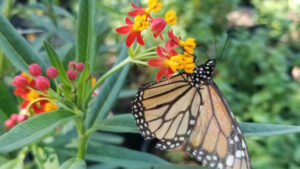
Monarch on Milkweed

Tropical Milkweed (Asclepias curassavica) is a popular plant for butterfly gardens in central Florida. This milkweed species is native to Central and South America but has naturalized in Florida and is a critical food source for Monarch butterflies. ©Photo by Anna Stubbendick, Canterbury Farms

The next step is to choose the right plants for your butterfly garden. Butterflies prefer plants that have a lot of nectar, as this is the primary food source for adult butterflies. Some of the best plants for butterflies include milkweed, which is a host plant for Monarch butterflies, and coneflower, which is popular with many species of butterflies. Canterbury Farms Nursery & Garden Center has Tropical Milkeed (Asclepias curassavica) in stock right now.  Other excellent plants for butterfly gardens include butterfly bush, black-eyed Susan, lantana, and zinnias. Make sure to choose plants that bloom at different times throughout the year, so the butterflies have a constant supply of nectar.

When creating a butterfly garden, it’s important to avoid using pesticides, as many of these chemicals are toxic to butterflies and other pollinators. Instead, consider using natural methods of pest control, such as companion planting, where you plant certain plants together that help to repel pests.  The use of natural predators such as ladybugs is also a safe and effective way of managing some insect pest populations like aphids and whiteflies.  Canterbury Farms Nursery & Garden Center now has live ladybugs available for sale; they come in a 1500ct package for $14.95.  By avoiding pesticides, you’re not only protecting the butterflies in your garden but also contributing to a healthier ecosystem.

Every garden can make a difference.

Pollinator.org, a website dedicated to promoting the health of pollinators, including butterflies, notes that “every little bit helps, and every garden can make a difference.” By creating a butterfly garden, you are not only providing a home for these beautiful insects but also supporting the health of your local ecosystem. This small step can make a big difference in the overall health and survival of butterfly populations.

Butterfly on Lantana

Lantana is another great choice for pollinator gardens. The non-native Lantana camara is the most common species found at most nurseries and garden centers, including Canterbury Farms. ©Photo by Anna Stubbendick, Canterbury Farms

In addition to benefiting the environment, creating a butterfly garden is also a fun and rewarding project for you and your family. It’s a great way to connect with nature, learn about the importance of pollinators like butterflies, and get some fresh air and exercise. Plus, it adds beauty to your outdoor space and provides a peaceful retreat where you can relax and enjoy the sights and sounds of nature.

As we celebrate Earth Day, let’s take action to protect our planet by creating butterfly gardens and supporting the health of our local ecosystems. According to Pollinator.org, “By creating a pollinator-friendly garden, you are helping to ensure the survival of these important insects, as well as the preservation of the local ecosystem.” So, grab your gardening gloves, get outside, and create a butterfly garden. It’s a fun and easy way to make a difference and contribute to a healthier planet. Happy Earth Day!

For more information, check out these helpful links:

Butterfly & Hummingbird-Friendly Plants

UF/IFAS Gardening Solutions: Gardening for Butterflies

Pollinator Partnership Regional Planting Guide


Anna Stubbendick is a FNGLA certified Horticulture Professional who has worked for Canterbury Farms Nursery & Garden Center since April 2021.  She has worked off and on in the landscape industry for the past 15 years or so.  Anna is a self-confessed “science nerd” who grew up with parents that instilled a love of gardening and all things nature-related.  When not at work, you can usually find Anna and her husband at the soccer fields with their teenage daughter or hiking in the Great Smoky Mountains on vacation.

Get Your Garden Fix with These Low-Maintenance Plant Picks
By: Anna Stubbendick, FCHP

If you’re like most homeowners, you want to enjoy beautiful plants without spending all your free time taking care of them. Well, we’ve got you covered! Our awesome staff at Canterbury Farms Nursery & Garden Center has picked out some of their favorite low-maintenance plants that you can usually find at our nursery. These plants are not only easy to care for but also provide vibrant colors, attractive foliage, and interesting textures to your garden.

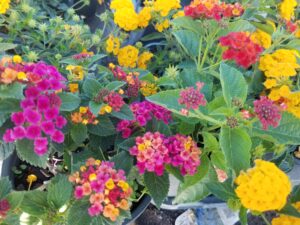
Lantana

Sunny Lantana is available in a variety of colors from bright yellows to shades of red and pink, and even purples and whites in its trailing form. ©Photo by Anna Stubbendick, Canterbury Farms

First up we have Christina’s pick, Lantana. This plant is an absolute breeze to take care of. It thrives in full sun and is drought-tolerant, making it an ideal choice for those hot summer months. Plus, it comes in a bunch of colors, so you’re sure to find one you love. And the best part? Butterflies and hummingbirds go nuts for Lantana, so you can sit back and watch nature come to you.

Beth’s favorite is the Mexican Flame Vine, which features vibrant orange and red flowers that bloom throughout the year. It is a fast-growing vine and produces bright orange-red flowers that’ll make your garden pop. You can grow it up a trellis, fence, or pergola – whatever suits your style. Mexican Flame Vine prefers full sun to partial shade and requires minimal water once established.  Bonus – the Mexican Flame Vine is also a great nectar source for Monarch butterflies!

African Iris White and Yellow

Graceful African Iris is a great choice for many different growing conditions. ©Photo by Anna Stubbendick, Canterbury Farms

If you’re looking for a plant that can handle a variety of growing conditions, the African Iris is my go-to recommendation. This hardy perennial is tough-as-nails, produces beautiful white, or yellow flowers, and is tolerant of dampness, drought, heat, and even frost. And since it’s deer-resistant, you won’t have to worry about those pesky critters snacking on it.

For a unique and striking addition to your garden, both Danielle and Matthew recommend the Apostle Iris, also called Regina Iris or Walking Iris. This plant produces tall, slender stems with purple flowers that resemble a bishop’s miter, hence the name “Apostle Iris.” It thrives in well-draining soil and requires minimal watering once established.

Foxtail Fern

Don’t be afraid to consider Foxtail Fern! Unlike other ferns, foxtails don’t spread and take over a garden space. ©Photo by Anna Stubbendick, Canterbury Farms

Have you ever seen a Foxtail Fern? Tammy’s favorite is super unique-looking with its long, narrow leaves that look like fox tails. This plant is drought-tolerant, making it perfect for those who forget to water their plants. It prefers partial shade but can also handle a good amount of sun, and well-draining soil.

Sarah’s choice is the sun-loving Purslane.  It’s one of the easiest plants to take care of and it’s also edible! This succulent-like perennial produces small yellow, white, or pink flowers and grows low to the ground, making it a great option for ground cover. And if you’re into healthy eating, you’ll be pleased to know that purslane is packed with omega-3 fatty acids, antioxidants, and vitamins. So not only is it easy on the eyes, but it’s good for you too!

Pentas

There’s a reason why Pentas are one of our top-selling plants! This hardy perennial is great for color all summer long. ©Photo by Anna Stubbendick, Canterbury Farms

Pentas are another low-maintenance gem, and a favorite of Britt’s. They produce clusters of star-shaped flowers in different colors like red, pink, and white. And if you’re into attracting pollinators, Pentas will bring all the butterflies and hummingbirds to your yard. Just give them some sun and well-drained soil, and they’ll be good to go.

If you’re after some texture, check out Dawn’s favorite, Podocarpus. This evergreen grows pretty slowly, so you won’t have to worry about it taking over your garden. Podocarpus features dense, dark green foliage that can be trimmed to any size or shape. It prefers partial to full sun and well-draining soil.

Majestic Beauty flowers

The ‘Majestic Beauty’ Hawthorn tree can be a great addition to your landscape. It’s evergreen and doesn’t take up too much space. ©Photo by Anna Stubbendick, Canterbury Farms

If you live in an area with salty soil or air, Annika recommends the Indian Hawthorn. This shrub produces clusters of white flowers in the spring and is tolerant of salt spray and saltwater flooding. Indian Hawthorn can also handle dry conditions, which is perfect for those of us living in areas with watering restrictions.  It prefers full sun to partial shade and well-draining soil.  Be sure to also consider the ‘Majestic Beauty’ Indian Hawthorn tree, with it’s showy pale pink flowers.  We’re one of the few nurseries in Florida that grows these stunners!

Steve’s pick is the Dwarf Walter’s Viburnum ‘Mrs. Schiller’s Delight’. This compact evergreen shrub is perfect for small spaces and requires very little maintenance. It produces clusters of fragrant white flowers in the spring backed by small dark green foliage. Plus, it’s a great choice for attracting pollinators like bees and butterflies.

Sunshine Ligustrum

The Sunshine Ligustrum is great for pops of color in full sun or part shade. It can be used in small spaces or as part of larger mass plantings. ©Photo by Anna Stubbendick, Canterbury Farms

Last but not least, we have Peter’s pick, the Sunshine Ligustrum. This evergreen grows quickly and produces bright yellow-green leaves that’ll make you feel like you’re in the tropics. It’s a fantastic deer-resistant shrub that adds a pop of color to your garden. Sunshine Ligustrum is drought-tolerant and prefers full sun to partial shade.  It’s also sterile, meaning that it doesn’t produce any flowers, which is great news for allergy sufferers!

So there you have it, our staff’s top picks for low-maintenance plants. Whether you’re a seasoned gardener or just starting, these plants are sure to add beauty and interest to your outdoor space without requiring a lot of work. Visit Canterbury Farms Nursery & Garden Center to find these and many more low-maintenance plants today!


Anna Stubbendick is a FNGLA certified Horticulture Professional who has worked for Canterbury Farms Nursery & Garden Center since April 2021.  She has worked off and on in the landscape industry for the past 15 years or so.  Anna is a self-confessed “science nerd” who grew up with parents that instilled a love of gardening and all things nature-related.  When not at work, you can usually find Anna and her husband at the soccer fields with their teenage daughter or hiking in the Great Smoky Mountains on vacation.