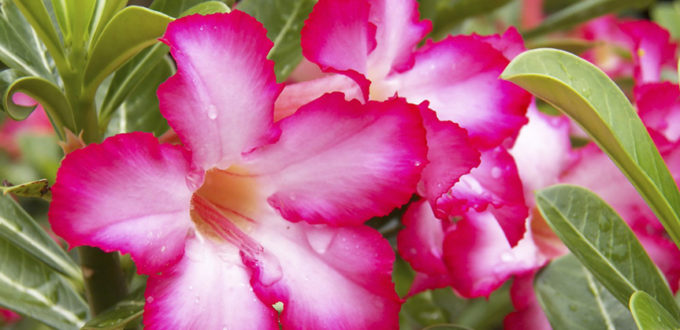
Desert Rose

Common Name: Desert Rose, Sabi Star, Mock Azalea, Impala Lily

Scientific Name: Adenium obesum

Type of Plant: Perennial

Description: The desert rose is a slow-growing plant, only growing about 12 inches per year. It is often used as a bonsai plant thanks to its thick succulent trunk, thin and delicate leaves, and luscious, deep pink trumpeting flowers. It is native to Africa, the Middle East, and Madagascar. The plant typically blooms during the summer months, erupting with vibrant pink, rose, or red flowers and bright green leaves. When it goes dormant for the winter season, it drops its flowers and foliage.

Mature Size: 3-9′ tall x 3-5′ wide

Blooms: White, Red, or Rose; Bloom time Summer

Fruit:  no

Climate Requirements: It’s best planted in the spring, and it will die if exposed to frost and freezing temperatures. The desert rose plant thrives in a full sun environment, so select a spot in your garden that is not shaded by taller plants but has some protection from high-noon sun, which can scorch the plant’s leaves.

Care Requirements: Tending to a desert rose plant is simple, but it does take some finesse. Similar to other succulent plants, it needs careful water management and lots of sunlight. For an added dose of nutrients (and potentially more flowers), you can feed your desert rose with liquid fertilizer (diluted by half) once a month during its active growth period. Do not fertilize the plant during its dormant period.

Before pruning, use rubbing alcohol or a bleach solution to sterilize your pruning tools; re-sterilize as you move from one plant to the next. Remove cold-damaged growth as soon as new growth emerges. Trim long, lanky stems to balance the stem growth symmetrically. Remove branches that rub or cross other branches, cutting just above a leaf node or where the stem joins with another stem.

Spacing: Space plants 24-36″ apart

Water Needs: The desert rose plant has varying water requirements depending on the time of year and temperature. During its growing season (late spring and summer), keep its soil moist but never saturated. Check on the soil periodically and allow it to dry out completely before watering. In the fall and winter months (when the plant typically goes dormant in the wild); drastically reduce moisture, watering only minimally once a month or so. If you’re curious if your plant is receiving enough water during its growing season, you can look at its trunk for the answer. A swollen, thick trunk (in proportion to the size of your plant) is a great indication that your plant is well-hydrated.

Maintenance: Low

Special Uses/Attributes: A member of the dogbane family, the sap of the desert rose plant is toxic to people and pets.

Florida Native: No

Crossandra

Common Name: Crossandra, Firecracker Flower

Scientific Name: Crossandra infundibuliformis

Type of Plant: Perennial

Description: Crossandra plants can be thought of as slightly easier cousins of the hibiscus, though they aren’t related. Also known as firecracker flower, crossandra is native to Sri Lanka and southern India. It features narrow, oblong leaves and showy peach or coral flowers.

Mature Size: 1-3′ tall x 1-2′ wide

Blooms: Peach or Coral flowers from April-October

Fruit:  no

Climate Requirements: Crossandra is among the few plants that provide months of lovely blooms in partial shade.  These plants thrive best in bright, indirect sunlight. During the summertime, do not expose them to direct sunlight. Crossandra is very heat-tolerant and cold-sensitive, as befitting a plant that comes from the tropics. If the temperature goes below 55 degrees Fahrenheit, the plant can experience damage to its leaves or the top growth.

Care Requirements: Feed your crossandra with a weak liquid fertilizer every two weeks throughout the growing season. Cut fertilizer back to once a month in the winter.  You can enhance the number of blooms you get from your crossandra plant by removing old and dying flowers (deadheading).

Spacing: Space plants 24-36″ apart

Water Needs: During the growing season, water frequently and never allow the soil to dry out. Crossandra plants are very susceptible to drought and like a slightly moist—but not soggy—soil at all times. Reduce the amount you water in the winter, even if you’re growing your crossandra indoors in a pot.

Maintenance: Low

Attracts: Butterflies

Special Uses/Attributes: Crossandra is especially valuable when paired with other shade-tolerant plants for color, including ​impatiens, coleus, and shrimp plants. Indoors, crossandra is tolerant of low light and will provide long-lasting flowers from late spring to autumn.

Florida Native: No